Definition: What Is a Penang Bar Lawyer?
A Penang Bar lawyer is a lawyer who is admitted to the Malaysian Bar and is registered with the Penang Bar as part of the state-level bar structure under the Malaysian Bar system.
Importantly, this does not mean they are restricted to practising only in Penang.
Lawyers in Malaysia generally have rights of audience across the country, subject to court rules and practice requirements.
So why does “Penang Bar lawyer” matter?
Because it refers to a lawyer who is:
- Admitted under the Malaysian Bar
- Actively registered and practising within the Penang Bar jurisdictional structure
- Accountable under both national and state-level professional frameworks
When you’re searching for legal help in Penang, you’ll often hear the term penang bar lawyer.
It sounds like a geographic limitation.
But in reality, it’s about professional registration and accountability, not restriction.
This distinction matters more than most people realise.
Because it directly affects your protection, your options, and the level of regulatory oversight behind your lawyer.
What Is the Penang Bar?
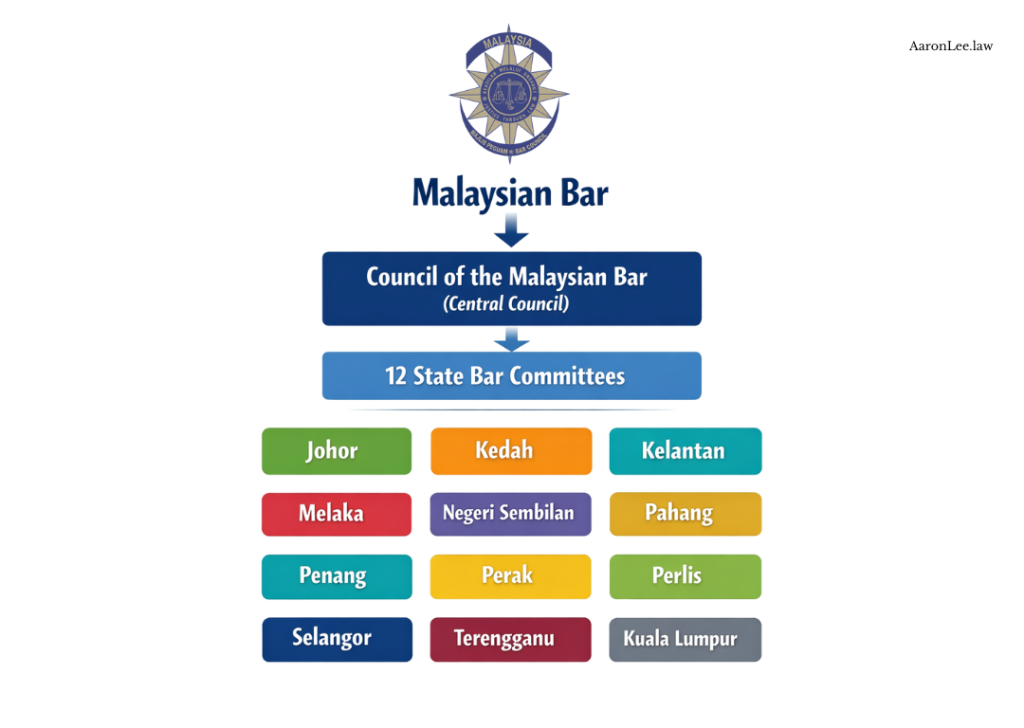
The Penang Bar is the state-level component of the Malaysian Bar structure. It represents lawyers who are practising and based within the Penang jurisdiction, while still operating under the national regulatory framework of the Malaysian Bar.
In simple terms:
The Malaysian Bar is the national body.
The Penang Bar is part of its state-level organisation structure.
The Penang Bar’s core functions include:
- Regulating professional and ethical conduct of lawyers within the Penang Bar structure
- Supporting continuing legal education and professional development
- Representing members in professional and administrative matters
- Providing a reference point for verifying practising lawyers
- Upholding public confidence in the legal profession
When someone identifies as a penang bar lawyer, they are indicating that they are part of this regulated professional ecosystem.
And more importantly, it gives you, as a client, enforceable protection.
The Role of the Bar Council in Regulating Lawyers
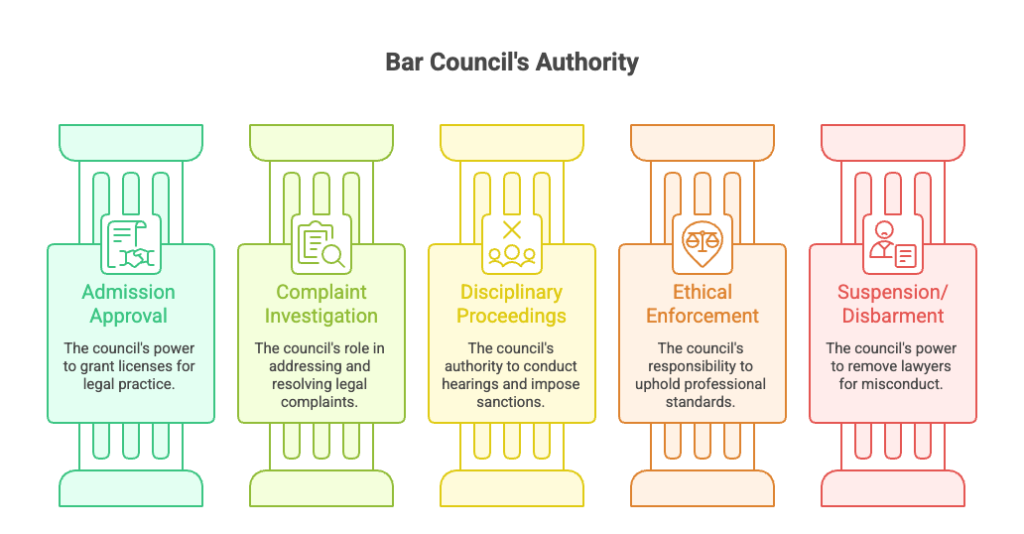
Every Penang Bar lawyer is subject to oversight by the Malaysian Bar Council, the national regulatory authority for lawyers in Malaysia.
The Bar Council has statutory authority to:
- Approve admission to legal practice
- Investigate complaints against lawyers
- Conduct disciplinary proceedings
- Enforce ethical and professional standards
- Suspend or disbar lawyers for misconduct
This regulatory structure ensures that lawyers practising in Penang are accountable to an independent governing body.
Many clients assume that anyone can claim to be a lawyer and start practising.
That assumption is wrong.
A penang bar lawyer operates under constant oversight.
If they breach ethical rules, mishandle client funds, or abuse their position, the Bar Council can suspend or disbar them entirely.
It means your lawyer has something real to lose if they act improperly.
How Lawyers Become Members of the Penang Bar
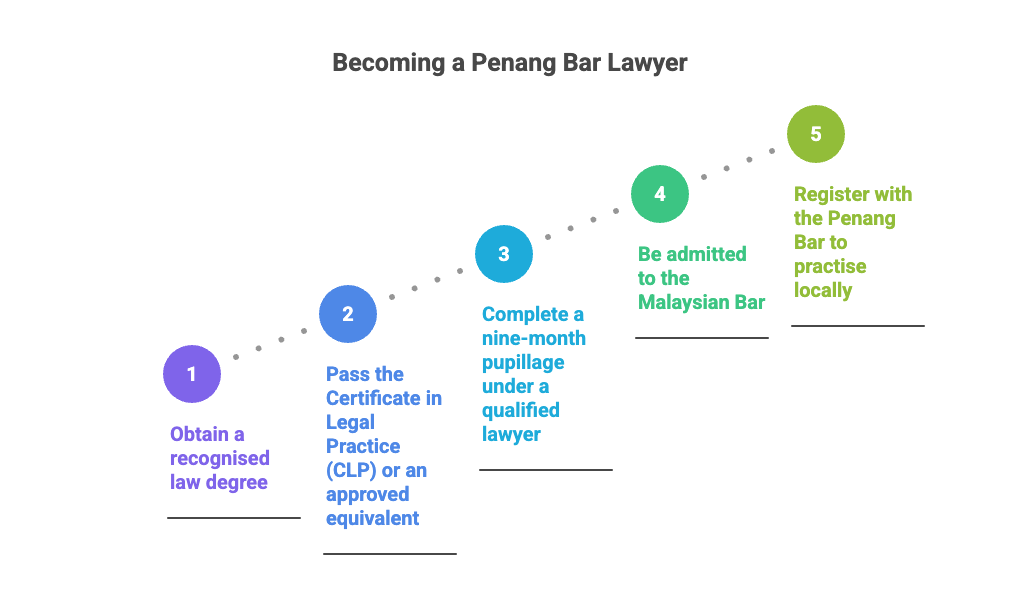
To become a Penang Bar lawyer, an individual must complete all of the following steps:
- Obtain a recognised law degree
- Pass the Certificate in Legal Practice (CLP) or an approved equivalent
- Complete a nine-month pupillage under a qualified lawyer
- Be admitted to the Malaysian Bar
- Register under the Penang Bar framework
Lawyers must also renew their practising certificates annually and comply with continuing professional development requirements.
Even after admission, membership isn’t permanent by default.
That process matters because it ensures your lawyer didn’t just “decide” to practise law.
They earned the right, and they have to keep earning it.
Pupillage is where theory meets reality.
This is where future penang bar lawyers handle real files, sit in real hearings, and learn professional responsibility under supervision, not from textbooks.
Code of Ethics Every Penang Bar Lawyer Must Follow
Penang Bar lawyers are bound by enforceable ethical obligations, including:
- Client confidentiality
- Acting in the client’s best interests
- Transparent and honest billing
- Avoidance of conflicts of interest
- Competent representation only
- Proper handling of client funds
- Reasonable communication with clients
Breaches of these rules can result in disciplinary action, including suspension or disbarment.
This is where regulation becomes personal.
Every penang bar lawyer is bound by strict, enforceable ethical rules.
Not guidelines.
Not suggestions.
For example, a penang bar lawyer cannot represent both sides in a dispute.
They cannot disclose your case details without consent.
They cannot misuse client money.
Ethics aren’t optional.
They’re the foundation of a lawyer’s licence to practise.
Why Clients Should Choose Registered Lawyers Only
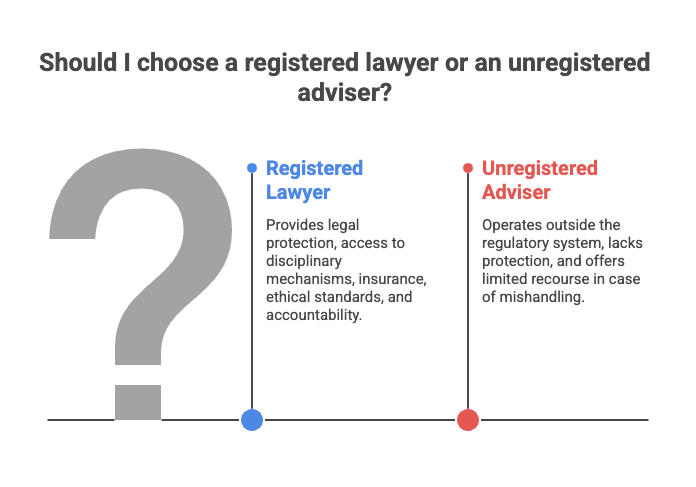
Engaging a registered Penang Bar lawyer provides legal protection that unregistered advisers cannot offer.
Registration ensures:
- Access to disciplinary and complaint mechanisms
- Professional indemnity insurance coverage
- Enforceable ethical standards
- Minimum competency requirements
Individuals offering legal services without registration operate outside the regulatory system and are not subject to Bar Council oversight.
If they mishandle your case or disappear with your money, your options are limited, or nonexistent.
With a penang bar lawyer, there is oversight.
There is an investigation.
There is accountability.
Saving a small amount upfront is never worth the risk of losing your case, or your rights.
If your matter is important, only engage a registered penang bar lawyer.
How to Verify a Lawyer’s Credentials in Penang
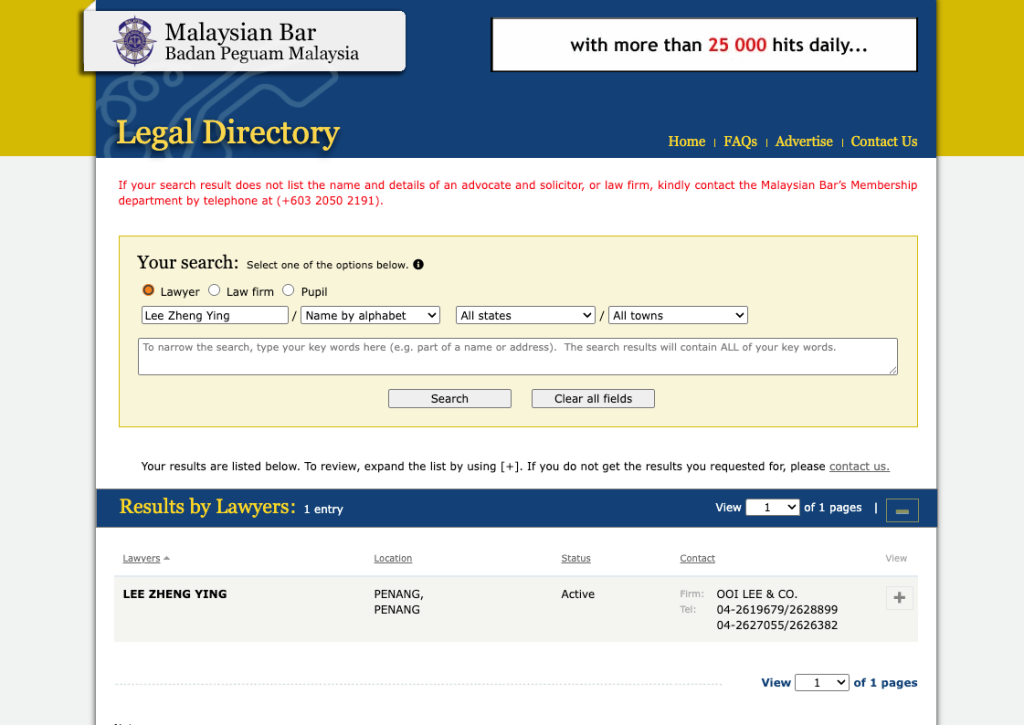
Before engaging a Penang Bar lawyer, you can verify them by:
- Requesting their Malaysian Bar membership number
- Searching the Bar Council’s Find a Lawyer or Law Firm portal
- Confirming registration with the Penang Bar
- Checking for a valid practising certificate
If a person claims to be a Penang Bar lawyer but cannot be verified through official channels, they are not authorised to practise.
When meeting a lawyer, ask direct questions:
- Have they handled cases like yours?
- What outcomes have they achieved?
- How are fees structured?
A legitimate penang bar lawyer will answer clearly and confidently.
Evasion or defensiveness is a signal, pay attention to it.
Looking for guidance? Learn how to identify 5 signs you’re working with a reputable lawyer firm in Penang to ensure you’re making the right choice.
Conclusion: Ethical Practice Builds Real Trust
The Penang Bar system exists within the broader Malaysian Bar framework to maintain professional standards and public trust in the legal system.
A penang bar lawyer is not defined by geography.
They are defined by qualification, regulation, and accountability.
When you engage a properly registered lawyer, you are working within a system designed to protect clients through enforceable rules and oversight.
Legal matters are already complex.
Your lawyer’s legitimacy should not be another uncertainty.
Verify credentials.
Ask the right questions.
Choose a properly registered penang bar lawyer in good standing.
Because when legal rights are at stake, structure and accountability matter.
FAQs
What’s the difference between the Penang Bar and the Malaysian Bar?
The Malaysian Bar is the national governing body for lawyers in Malaysia. The Penang Bar is a state-level structure within this system. A penang bar lawyer is part of both.
Can a lawyer practise in Penang without joining the Penang Bar?
Yes, a lawyer can practise in Penang without specifically joining the local Penang Bar committee, provided they hold a valid Sijil-Sijil Annual and Practising Certificate (SAPC) from the Malaysian Bar.
How do I file a complaint against a penang bar lawyer?
Complaints can be submitted to the Malaysian Bar Council or through the Penang Bar. Disciplinary investigations follow if misconduct is alleged.
Do penang bar lawyers specialise in specific areas of law?
Yes. Many focus on areas such as property, corporate, family, or criminal law. Clients should confirm relevant experience before engagement.
Are legal fees regulated for penang bar lawyers?
The Malaysian Bar provides fee guidelines, but fees vary depending on complexity and experience. Lawyers must disclose fees transparently.