Finding a trusted real estate lawyer in your area is one of the most important decisions in a Malaysian property transaction.
Buying a home, selling land, or transferring ownership involves:
- Sale and Purchase Agreements (SPA)
- Stamp duty calculations
- Title searches and land office procedures
- State consent and strata regulations
A single legal mistake can delay your transaction or cost you thousands of ringgit.
This guide explains how to choose a reliable real estate lawyer in Malaysia, using a clear, step-by-step checklist based on real conveyancing practice.
This is not legal advice, it is a practical decision framework.
Why Choosing the Right Real Estate Lawyer Matters
Not all lawyers handle property matters regularly.
In Malaysia, some firms:
- Specialise in conveyancing and property transactions
- Handle property work only occasionally alongside other practice areas
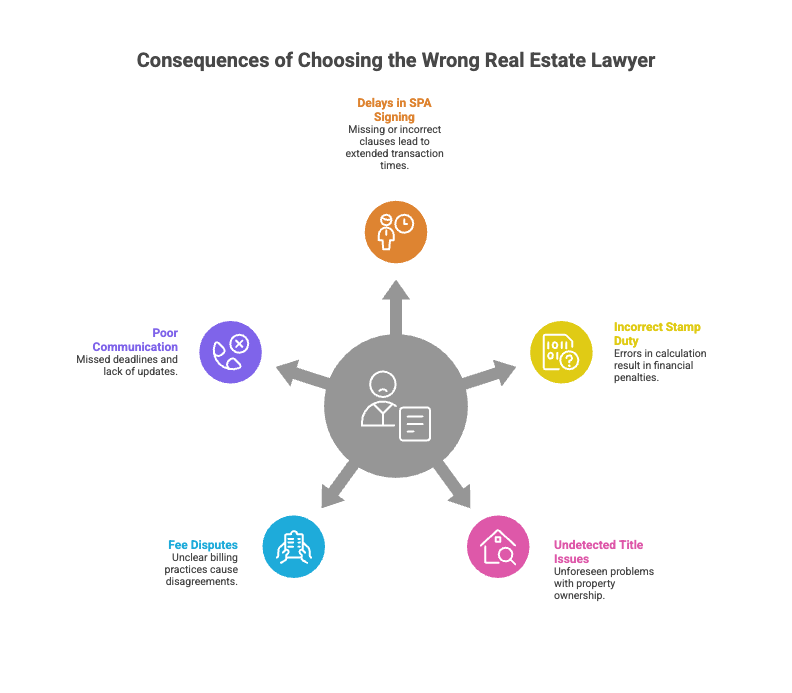
Choosing the wrong lawyer can lead to:
- Delays in SPA signing due to missing or incorrect clauses
- Incorrect stamp duty calculations
- Undetected title issues or encumbrances
- Fee disputes caused by unclear billing
- Poor communication and missed deadlines
Many of these issues stem from common legal mistakes people make when buying property in Malaysia.
A reliable real estate lawyer in your area provides:
- Clear explanations in plain English
- Faster and smoother transaction timelines
- Early detection of title or compliance issues
- Protection against unpaid quit rent, caveats, or restrictions
A good real estate lawyer in your area does more than prepare documents.
They spot problems early.
They understand local land offices.
They know state-specific procedures.
They help you avoid unnecessary drama.
That peace of mind is worth far more than the legal fee.
Step 1: Look for Lawyers With Local Property Experience

What to look for
A trusted real estate lawyer in your area should:
- Regularly handle conveyancing and property transactions
- Be familiar with the land office where the property is located
- Have experience with the specific property type (subsale, strata, land)
- Have clear explanation of their process
How to check
- Google search: “real estate lawyer in [your city/state]”
- Visit law firm websites and check for “conveyancing” or “property law”
- Read testimonials and case highlights
- Look for experience in residential, commercial, or strata properties
Red flags
- Generic website with no clear focus on property or conveyancing
- Too many unrelated practice areas listed
- No lawyer profiles or experience details
- Outdated or incomplete website information
A lawyer in Kuala Lumpur may be excellent.
But if your property is in Penang, Johor, or Kedah, you want a real estate lawyer in your area who understands how things work on the ground.
Always check if they’ve handled cases similar to yours.
Buying a condo?
Look for strata title experience.
Buying land?
Check for experience with agricultural land or special restrictions.
Step 2: Verify Registration With the Malaysian Bar
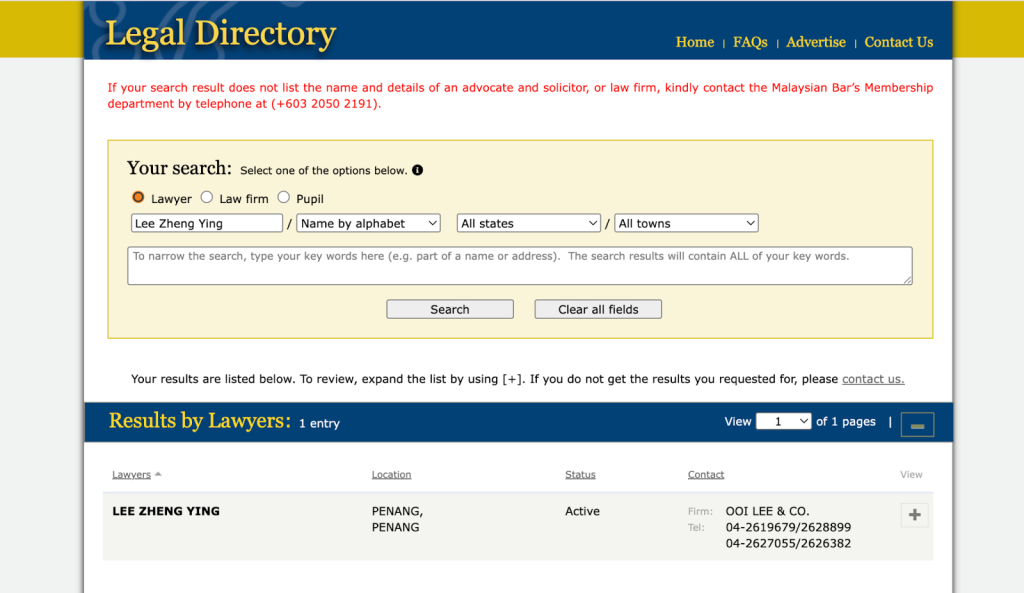
Visit Malaysian Bar website to search for a registered lawyer.
Every practising lawyer in Malaysia must be registered with the Malaysian Bar.
How to verify a real estate lawyer
- Visit the Malaysian Bar website
- Use the Lawyer Directory search
- Confirm:
- Active practising certificate
- Current firm affiliation
Minimum standards to expect
- Active practising status
- 3 to 5 years of conveyancing or property experience
- No serious disciplinary records
If a lawyer avoids sharing their Bar registration details, that is a clear warning sign.
No registration means they are not a lawyer.
Bonus tip: Lawyers involved in conveyancing committees or property law groups often stay more updated with regulations.
Step 3: Read Reviews and Real Case Experiences
Reviews often reveal service quality that firm websites do not.
Where to look
- Google reviews (especially neutral or mixed reviews)
- Facebook recommendations
- Property forums
- Referrals from friends, family, or agents
What matters most in reviews
- Communication speed and clarity
- Fee transparency
- Problem handling during delays or complications
- Whether the transaction completed smoothly
A single negative review is normal.
Repeated complaints about the same issue are not.
Focus on real feedback, not just perfect 5-star ratings.
Case studies are even better.
They show how a lawyer thinks, not just what they promise.
Watch for warning signs:
- Repeated complaints about slow replies
- Missed deadlines
- Confusing billing
- Clients feeling ignored
Step 4: Compare Fees and Scope of Service
Typical costs include
- Professional legal fees (commonly 0.4%–1% of property price)
- Disbursements (searches, registration, courier)
- Stamp duty (government charge)
- Land office and registration fees
What a proper quote should include
A real estate lawyer in your area should clearly explain:
- What services are included
- What costs are excluded
- When payments are due
- Possible additional charges
A full-service conveyancing lawyer handles
- Title searches and due diligence
- SPA drafting or review
- Loan documentation (if applicable)
- Stamp duty adjudication
- Registration and follow-ups until completion
- Communication with all parties
Unusually low fees often indicate limited service or hidden costs.
Price alone is not everything.
Step 5: Schedule a Consultation and Ask Proper Questions

A short consultation reveals how a lawyer actually works.
Ask about experience
- How many property transactions do you handle yearly?
- Have you handled cases similar to mine?
- What is the expected timeline?
Ask about process
- Who manages my file day-to-day?
- How will updates be provided?
- What documents do you need from me?
Ask about fees and communication
- Can you provide a written fee estimate?
- How are extra costs handled?
- How quickly do you usually respond?
Red flags
- Vague answers
- Rushing you
- Pressure to sign immediately
- No clear next steps
Green flags
- Clear explanations
- Honest discussion of risks
- Structured process
- Respect for your concerns
Trust your instincts.
This person is protecting one of your biggest assets.
Quick Checklist: A Reliable Real Estate Lawyer
A trusted real estate lawyer in your area should have:
- Local property and conveyancing experience
- Malaysian Bar registration
- Clear and timely communication
- Transparent fee structure
- Positive reputation and reviews
- Full transaction support from start to finish
If most of these boxes are ticked, you are likely choosing correctly.
Final Thoughts: Choose Expertise, Not Convenience
It’s tempting to choose the fastest or easiest option.
But property transactions in Malaysia are complex.
Mistakes are expensive.
Delays are stressful.
The right real estate lawyer in your area protects your money, your time, and your peace of mind.
Do your checks.
Ask questions.
Compare properly.
And when you’re ready to work with an experienced, transparent, and trusted property legal team, visit me to see how I help clients protect their property transactions from start to finish.
Frequently Asked Questions
How do I know if a property lawyer is actually handling my file and not just a clerk?
In most Malaysian firms, clerks assist with documentation, but a qualified lawyer should supervise all legal work.
You should confirm:
- Which lawyer is responsible for your file
- Whether the lawyer reviews the SPA and title personally
- Who you should contact if issues arise
If you never speak to the lawyer handling your matter, that is a service red flag.
Should I choose a lawyer recommended by a property agent?
Property agents often recommend lawyers they work with regularly.
This can be convenient, but you should:
- Confirm the lawyer represents only you
- Ask whether the agent receives any referral benefit
- Ensure the lawyer is willing to challenge the transaction if issues arise
A good real estate lawyer protects your interests, even if it delays the deal.
Is it risky to change lawyers midway through a property transaction?
Changing lawyers is allowed, but it may:
- Cause delays
- Require payment for work already done
- Involve file transfer coordination
It is best to change lawyers early if problems arise, before critical documents are signed.
What documents should I never sign without a lawyer’s review?
You should never sign the following without legal review:
- Sale and Purchase Agreement (SPA)
- Deed of Assignment
- Loan agreements and security documents
- Side letters or indemnity clauses
Even small wording changes can affect your rights significantly.
What happens if my property transaction is delayed by the land office or developer?
Delays can occur due to:
- Land office backlogs
- Incomplete documents
- Developer compliance issues
Your lawyer should:
- Explain the cause clearly
- Follow up with the relevant authority
- Advise whether extensions or notices are required
Lack of updates during delays is a common service complaint.